Zoo lions fed whole carcasses ate almost three times longer, study finds
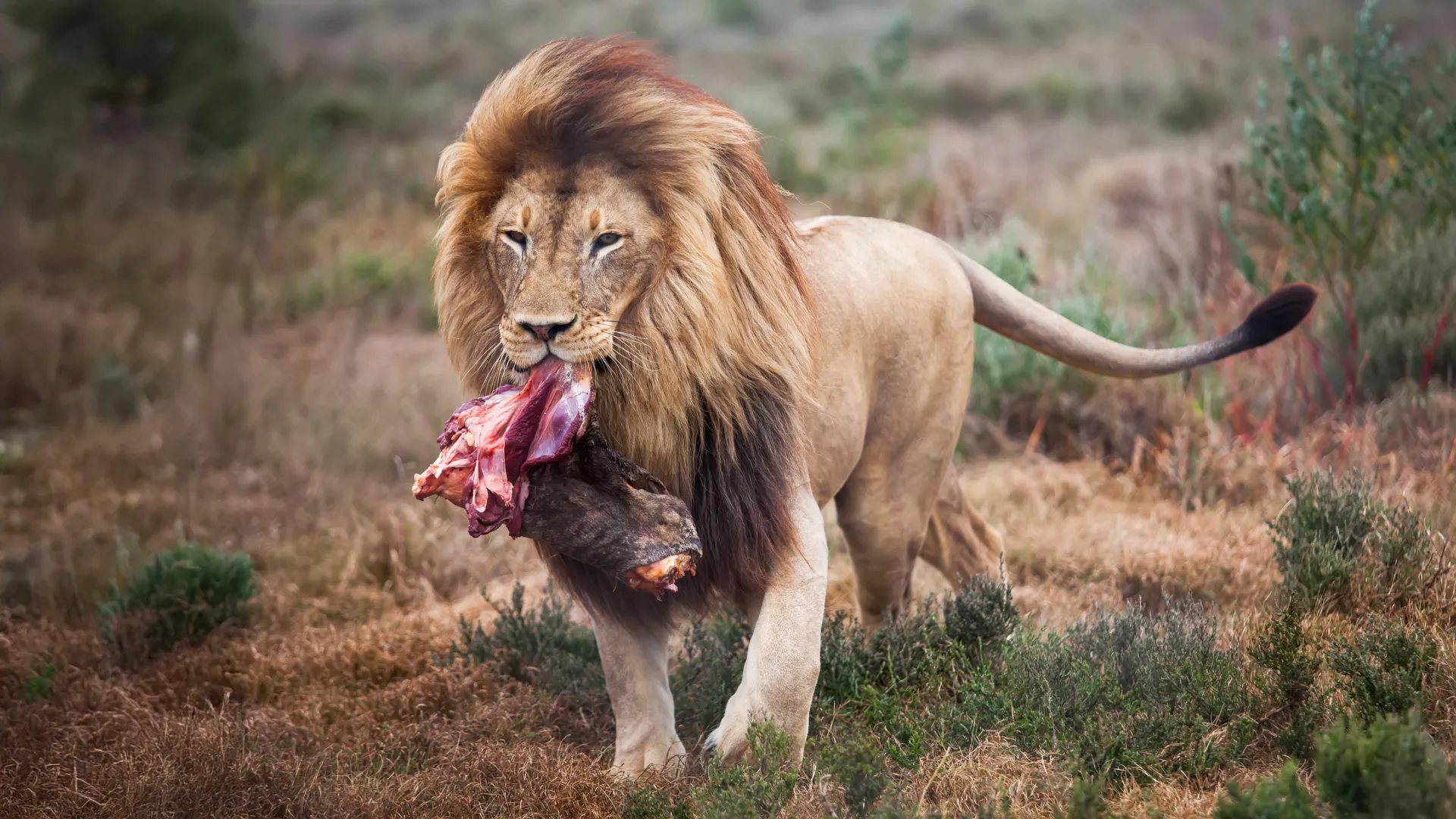
Adelaide University and Monarto Safari Park researchers said three male lions showed wild-like feast-and-fast feeding patterns when given whole carcasses every nine days.
Key facts
- Three adult male African lions at Monarto Safari Park in South Australia were observed before and after whole carcasses were added to their feeding routine every nine days.
- The lions received about 200 kilograms of carcasses during the experimental phase, with food left available for as long as three days.
- Eight infrared cameras recorded the lions continuously over three months, producing what ScienceDaily described as one of the most detailed 24-hour datasets yet assembled for African lions in human care.
- On carcass feeding days the lions spent almost three times as long eating as they typically did.
- Pacing increased slightly over the study period but did not consistently rise as the lions went longer without food.
A study published in Applied Animal Behaviour Science reported that zoo lions behaved more like wild lions when given whole animal carcasses as part of a feast-and-fast feeding schedule. ScienceDaily reported the research was conducted by Adelaide University and Monarto Safari Park in South Australia. The team observed three adult male African lions before and after whole carcasses were introduced. ScienceDaily reported the team also included Florence Demoulin, a visiting Masters student from the University of Liege in Belgium.
Animal care staff added whole carcasses every nine days to an existing feeding routine built around periods of eating and fasting. During the experimental phase the three lions received approximately 200 kilograms of carcasses, and the food was left available for as long as three days before a period of rest and digestion. Researchers used eight infrared cameras to record the animals continuously over three months.
The study reported that the lions spent almost three times as long eating on carcass feeding days as they typically did. They also fed more frequently and for longer stretches as they tore apart, pulled at, manipulated and consumed the carcasses. After feeding, the lions spent considerably more time lying down and resting, and their movement gradually increased again as the fasting period continued.
Lead author Lesia Hryhorenko, from Adelaide University's School of Animal and Veterinary Sciences, said the study provides new information about how feeding routines can shape the behavior of carnivores living in human care. "Wild lions don't eat at the same time every day. They experience natural periods of feasting and fasting depending on hunting success," Hryhorenko said. "Providing whole carcasses changes much more than the nutritional content of the diet," Hryhorenko said, adding that it gives lions the opportunity to engage in behaviors such as tearing, pulling and manipulating food over extended periods.
The researchers also tracked pacing, a repetitive behavior in carnivores that is often linked to anticipation. Pacing increased slightly over the study period, but it did not consistently rise as the lions went longer without food. The largest increases occurred around predictable events such as keeper arrivals and times when the animals were moved between areas of their habitat. According to the study, that pattern suggests pacing may have been more strongly connected to familiar daily routines.
Context
Wild lions do not eat at the same time every day and experience natural periods of feasting and fasting depending on hunting success, Hryhorenko said. The researchers said they wanted to understand how African lions in human care respond when feeding routines more closely resemble those natural patterns.
How outlets headlined it
How this was made
Compiled by our AI newsroom from 1 independent outlets, checked by a separate AI editor against the sources. Only claims found in the sources are reported. Spot an error? Every source is linked below.
Factual additions, source corrections, and primary references welcome. Strict zero-troll and zero-spin policy.
No notes yet. Be the first to provide factual context.
Reader Discussion & Community Notes
0 Contributions