Webb telescope finds signs of Mars-sized bodies colliding in young star systems
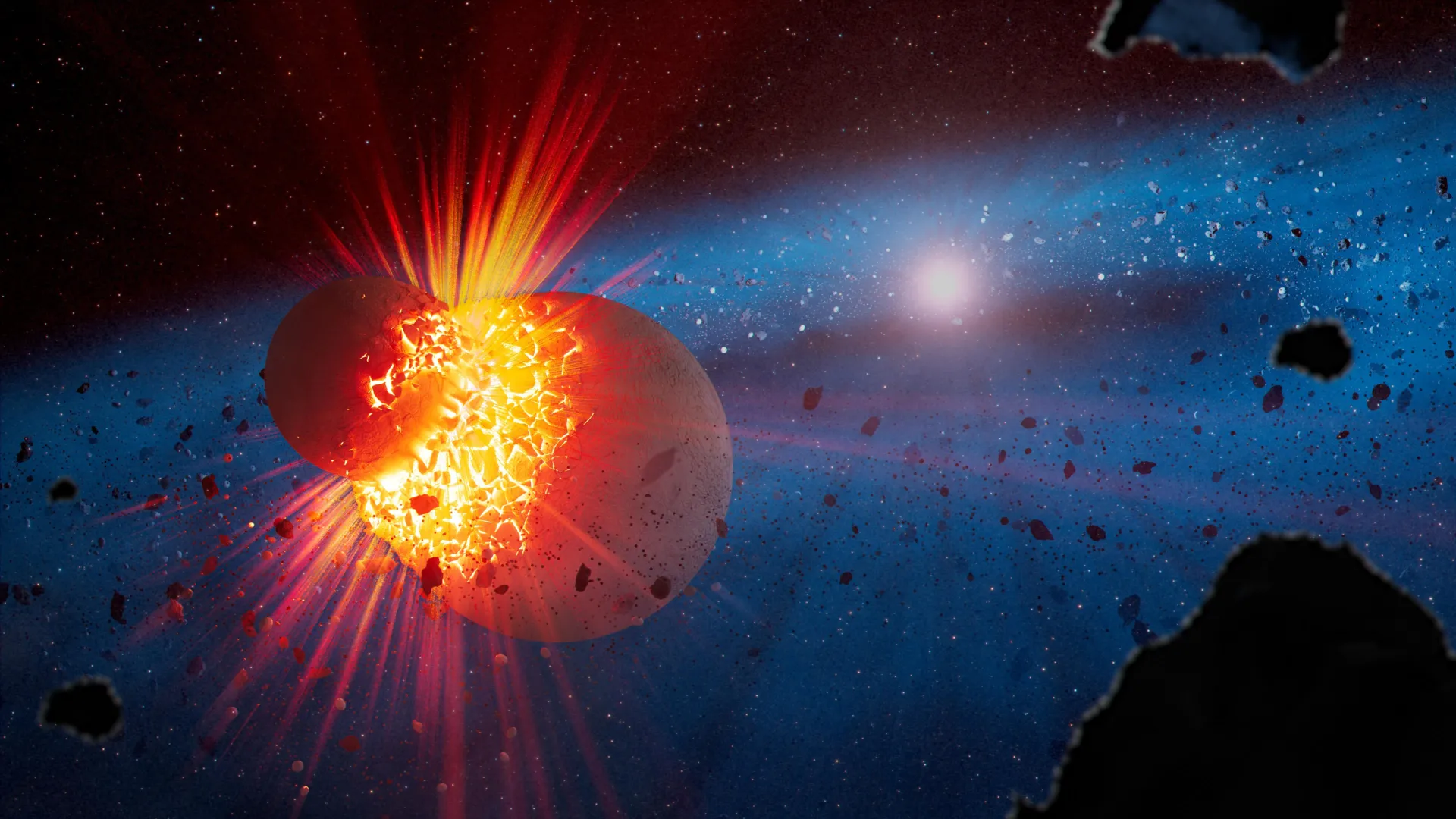
Astronomers used NASA's Webb telescope to study 21 extreme debris disks, systems with large amounts of warm dust, to learn how rocky planets form, according to a 1 October study.
Key facts
- The team's findings were published on 1 October in The Astrophysical Journal.
- Kate Su of the Space Science Institute in Boulder, Colorado, led the team of astronomers.
- The researchers assembled a sample of 21 extreme debris disks: five from archival Spitzer observations and 16 studied with Webb.
- Scientists estimate that only about 1% of young stars show observable signs of this stage.
- The disks fall into two groups: silica-rich and silica-poor.
Astronomers are using NASA's James Webb Space Telescope to investigate young star systems that appear to be experiencing violent collisions, according to ScienceDaily. The team's findings were published on 1 October in The Astrophysical Journal. Kate Su of the Space Science Institute in Boulder, Colorado, led the team of astronomers.
The study examined systems known as extreme debris disks, which contain exceptionally large amounts of warm dust close to their stars, roughly in the same region where rocky planets orbit in our own solar system. NASA's retired Spitzer Space Telescope identified this category. The researchers assembled a sample of 21 such disks: five came from archival Spitzer observations and 16 were studied with Webb. Of the Webb sample, 12 disks were newly observed and four were follow-up observations of systems previously examined by Spitzer.
"This is the first time we have gathered enough systems to truly understand this subclass that we call extreme debris disks," Su said. "Before Webb, we had limited information. We knew that they are weird and very different from the typical cold debris disks that we know, like Vega and Fomalhaut." Su said that with more data, the researchers can pin down what these disks represent for planet formation and evolution.
The researchers confirmed three defining characteristics of extreme debris disks, according to ScienceDaily. Their dust grains are smaller than those found in protoplanetary or more typical debris disks, they contain unusually high concentrations of warm dust, and their brightness changes irregularly over time. Webb and Spitzer revealed these features through mid-infrared spectra.
The researchers examined the minerals present in the disks and divided the systems into two broad groups: silica-rich disks and silica-poor disks, according to ScienceDaily. On Earth, volcanic glass such as obsidian is an example of silica-rich material, while the silica-poor mineral forsterite can be seen as green sand grains on certain beaches in Hawaii.
Theoretical models suggest extreme debris disks should be relatively common, but observations tell a different story, according to ScienceDaily. Based on data gathered so far, scientists estimate that only about 1% of young stars display observable signs of this stage. Our own solar system may also have passed through such a phase while it was forming.
Context
Scientists think a collision between the young Earth and a Mars-sized body called Theia vaporized rock and threw debris into space, and that some of that debris came together to form the Moon. NASA's Artemis program is returning humans to the Moon. Astronomers study extreme debris disks because they may be young star systems undergoing similar collisions.
How outlets headlined it
How this was made
Compiled by our AI newsroom from 1 independent outlets, checked by a separate AI editor against the sources. Only claims found in the sources are reported. Spot an error? Every source is linked below.
Factual additions, source corrections, and primary references welcome. Strict zero-troll and zero-spin policy.
No notes yet. Be the first to provide factual context.
Reader Discussion & Community Notes
0 Contributions