Storm Isaias leaves four dead in Florida and Alabama, over 500,000 without power
Four people died as Isaias moved across the southern US after making landfall as a Category 2 hurricane near Destin, Florida, on Friday.
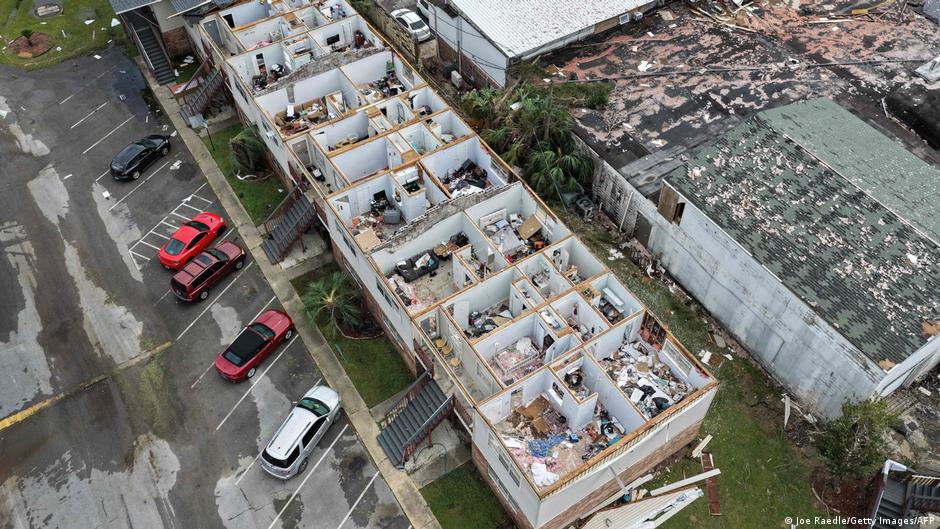
Key facts
- Four people died, two in Florida and two in Alabama, according to DW.
- Isaias made landfall on Friday evening as a Category 2 hurricane near Destin, Florida, and was the first Atlantic hurricane of the 2026 season, DW reported.
- More than 500,000 customers were without power in Florida and Alabama, according to PowerOutage.com, cited by DW.
- Millions of people across several states, including Florida, Georgia and Alabama, were under evacuation orders, The Guardian reported.
- The National Hurricane Center said the storm weakened into a post-tropical cyclone moving over Tennessee and Kentucky into West Virginia.
Storm Isaias left four people dead as it moved across the southern United States, according to DW. Two of the deaths were in Florida and two were in Alabama, DW reported. The storm made landfall on Friday evening as a Category 2 hurricane near Destin, Florida, and was the first Atlantic hurricane of the 2026 season, according to DW.
Millions of people across several states, including Florida, Georgia and Alabama, were under evacuation orders, The Guardian reported. All three states declared states of emergency, with mandatory evacuations ordered in some coastal communities, according to The Guardian. More than 370 trained American Red Cross disaster workers supported the response, and shelters opened across Florida, Louisiana, Alabama and Mississippi, The Guardian reported.
More than 500,000 customers were without power in Florida and Alabama, according to PowerOutage.com, cited by DW. The Florida Division of Emergency Management said approximately 5,000 Florida National Guard soldiers and airmen had been activated to support impacted communities. The Guardian reported that about 5,000 national guard troops were expected to mobilize in Florida, where at least four school districts cancelled late-week classes.
The National Hurricane Center said the storm weakened into a post-tropical cyclone — a storm that has lost its tropical characteristics — and was moving over Tennessee and Kentucky into West Virginia. The NHC warned of possible flash and urban flooding and said landslides were possible across the Southern Appalachians, along with wind gusts, additional power outages and downed trees. The Guardian reported the NHC had warned of a life-threatening storm surge and said hurricane-force winds were expected to spread inland as far as 100 miles (160km) from the Alabama coast.
Isaias could bring 4-8 inches of rain, with local totals up to 15 inches (380mm), across parts of the Gulf coast, The Guardian reported, citing forecasters. The NHC said a couple of tornadoes were possible across eastern Georgia and the Carolinas. It also said swells would continue to affect the Gulf coasts of the US, Mexico and western Cuba and were likely to cause life-threatening surf and rip current conditions.
Hurricane Simon reached Category 4 strength as it moved toward Mexico's Pacific coast, where it was expected to make landfall on Sunday and affect Puerto Vallarta, according to DW. Before Isaias, oil and gas producers shut down a significant share of offshore production in the Gulf, which accounts for almost 15% of crude pumped annually in the US, The Guardian reported.
Context
The Guardian reported the El Niño climate pattern is a factor in this year's quieter Atlantic hurricane season. El Niño warms sea surface temperatures in the Pacific, where storm activity has been greater, and increases wind shear — changes in wind speed and direction with height — over the Atlantic, which can disrupt tropical storms. Isaias was the first Atlantic hurricane of the 2026 season, which The Guardian described as a very late one.
How outlets headlined it
How this was made
Compiled by our AI newsroom from 2 independent outlets, checked by a separate AI editor against the sources. Only claims found in the sources are reported. Spot an error? Every source is linked below.
Open reader debate: Factual contributions and additions are synchronized directly in real time across all readers.
Loading contributions from cloud server…
Reader Discussion & Community Notes