Stanford-led study reports cartilage regrowth in mice by blocking aging protein
A Stanford Medicine-led study reported that blocking the protein 15-PGDH restored cartilage in older mice and prompted human knee cartilage samples to produce new tissue.
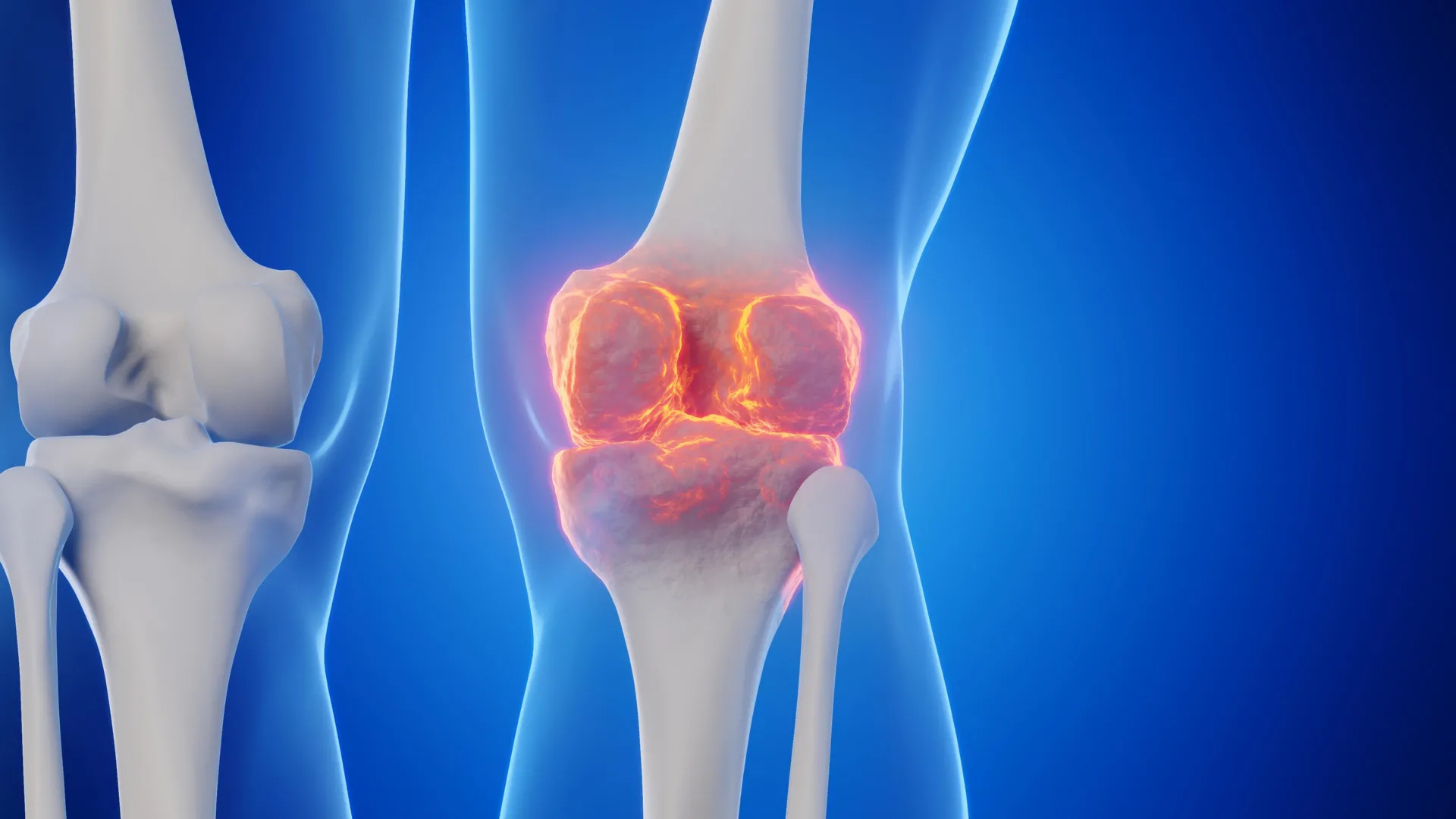
Key facts
- Blocking the protein 15-PGDH reversed naturally occurring cartilage loss in older mice and protected mice from arthritis after knee injuries similar to ACL tears, according to ScienceDaily.
- Human cartilage samples collected during knee replacement surgeries began producing new, functional cartilage after the treatment, the report said.
- Osteoarthritis affects about one in five adults in the United States and is estimated to account for roughly $65 billion in direct health care costs each year, according to the report.
- The study was published in Science; Helen Blau and Nidhi Bhutani are senior authors, and Mamta Singla and Yu Xin (Will) Wang are lead authors.
A Stanford Medicine-led research group reported a way to restore cartilage in aging knee joints, at least in mice, by blocking a protein called 15-PGDH whose levels rise with age, according to ScienceDaily. The approach reversed naturally occurring cartilage loss in older animals and protected mice from developing arthritis after knee injuries similar to ACL tears in people, the report said. The findings were published in Science.
Cartilage samples collected during knee replacement surgeries responded to the treatment by beginning to produce new, functional cartilage, ScienceDaily reported. Researchers said the results suggest cartilage damaged by aging or arthritis may be more capable of repair than previously thought. If the strategy ultimately works in people, researchers believe it could potentially lead to an oral medicine or injection that regenerates cartilage and reduces the need for knee or hip replacement surgery, according to the report.
The researchers described 15-PGDH as a gerozyme, a term for enzymes that become more abundant with age and contribute to the gradual loss of tissue function. Previous work by the same group showed that blocking the protein with a small molecule increased muscle mass and endurance in old mice, while increasing 15-PGDH in young animals caused their muscles to shrink and weaken, according to the report. The protein has also been linked to the regeneration of bone, nerve and blood cells.
In cartilage, the repair did not depend on stem cells, the report said. Instead, existing cartilage cells called chondrocytes changed their patterns of gene activity and shifted toward a more youthful state. "This is a new way of regenerating adult tissue, and it has significant clinical promise for treating arthritis due to aging or injury," Helen Blau, PhD, professor of microbiology and immunology, said. "We were looking for stem cells, but they are clearly not involved. It's very exciting."
Nidhi Bhutani, PhD, associate professor of orthopaedic surgery, said millions of people suffer from joint pain and swelling as they age and called it a huge unmet medical need. "Until now, there has been no drug that directly treats the cause of cartilage loss," Bhutani said. "But this gerozyme inhibitor causes a dramatic regeneration of cartilage beyond that reported in response to any other drug or intervention."
Osteoarthritis is a degenerative joint disease in which cartilage gradually breaks down, leaving joints painful, swollen and increasingly difficult to move, according to the report. It affects about one in five adults in the United States and is estimated to account for roughly $65 billion in direct health care costs each year. Current treatments mainly control pain and other symptoms, and once the disease becomes severe, surgically replacing the damaged joint may be the only remaining option; there is currently no drug that can reliably slow or reverse osteoarthritis itself, the report said.
Context
According to the report, current treatments mainly control pain and other symptoms, and once osteoarthritis becomes severe, surgically replacing the damaged joint may be the only remaining option. The Stanford-led work was done in mice, with additional tests on human cartilage samples collected during knee replacement surgery.
How outlets headlined it
How this was made
Compiled by our AI newsroom from 1 independent outlets, checked by a separate AI editor against the sources. Only claims found in the sources are reported. Spot an error? Every source is linked below.
Factual additions, source corrections, and primary references welcome. Strict zero-troll and zero-spin policy.
No notes yet. Be the first to provide factual context.
Reader Discussion & Community Notes
0 Contributions